


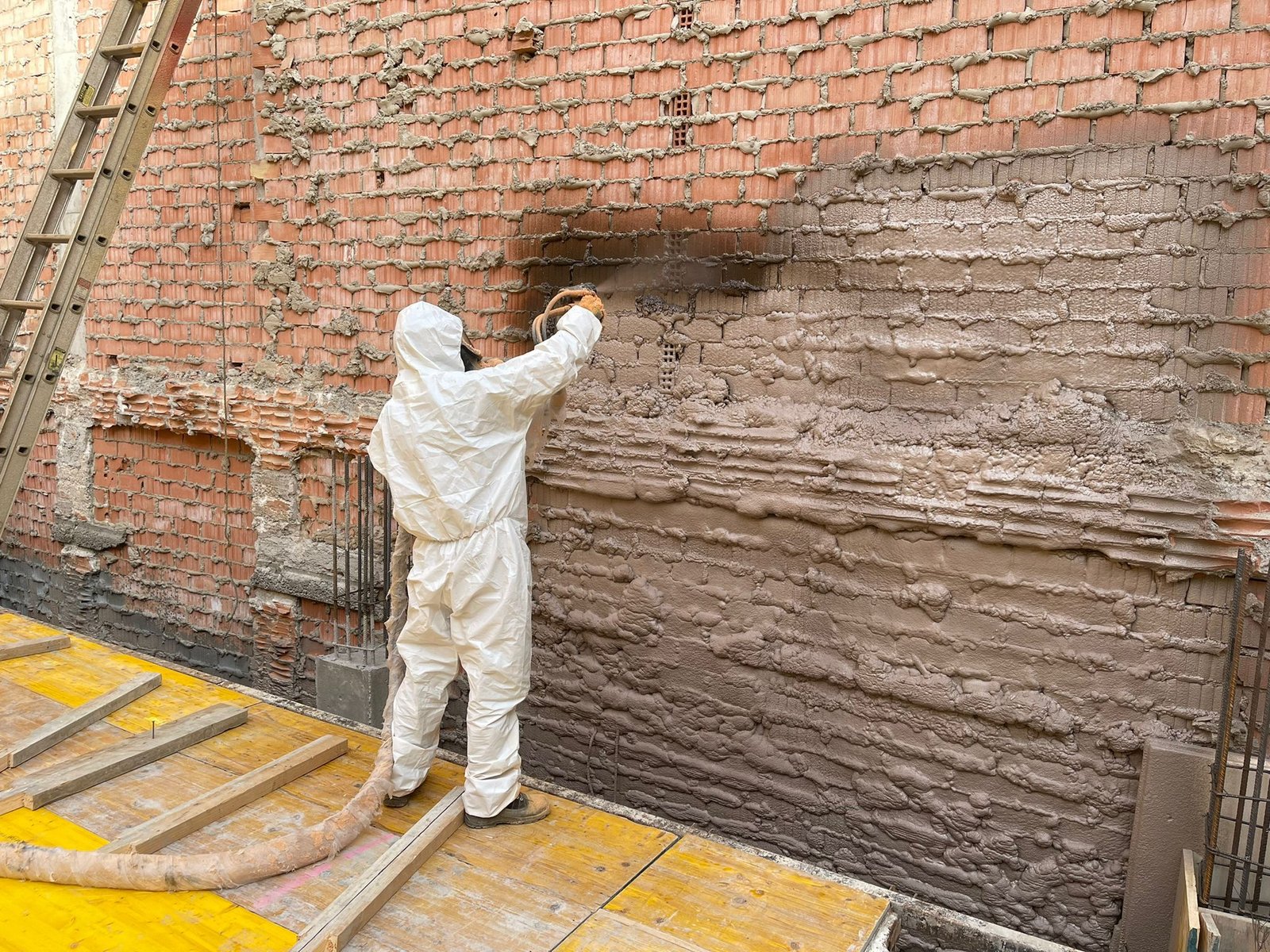
Spray foam
Applied directly to an accessible substrate, the foam expands and bonds to form a continuous layer that follows the surface. It can be used on compatible roofs, walls, ceilings and irregular surfaces.
INSULATION · WATERPROOFING
Thermal insulation adapted to each surface: we select the foam and application method to reduce heat, cold and energy loss in homes, industrial buildings and boats.
Request a technical assessmentApplied directly to an accessible substrate, the foam expands and bonds to form a continuous layer that follows the surface. It can be used on compatible roofs, walls, ceilings and irregular surfaces.

Foam is introduced into cavities through access points and expands inside them. This can improve existing walls without dismantling them entirely. We first check the cavity’s condition, continuity and available space.

For Uralita and other fibre-cement roofing sheets, we first identify the material and assess its condition. Where no asbestos is present, we assess an insulation system compatible with the substrate.
Where asbestos is present, encapsulation requires specialist assessment and compliance with applicable technical and legal requirements. Spraying foam alone does not constitute asbestos encapsulation: the treatment does not remove asbestos or replace removal when it is required.
We adapt the foam composition and characteristics to the job by selecting a specific manufacturer formulation. Foams do not all perform alike: system, density, cell structure and thickness are selected for the substrate, use and exposure, following the product’s mixing ratios and application instructions.
Open-cell and closed-cell foams behave differently in relation to air, water vapour and mechanical demands. We therefore assess the complete solution, including a protective finish where required.
Reduces heat transfer through treated elements and helps maintain a more stable temperature.
Reduces heating and cooling demand associated with poor insulation. Savings depend on the building and its use.
Spraying or injection can reach complex shapes and improve insulation continuity.
Can help when insufficient insulation is a contributing cause. Moisture and ventilation must also be assessed.
Insulation foam alone does not replace a complete waterproofing system. Where there are leaks or outdoor exposure, we also specify the protection and complementary treatments needed.
Share the location, approximate area and the problem you have noticed. We assess the solution and organise work in Spain and abroad.
Request a technical assessment