


More stable temperatures
Insulation limits heat transfer through treated elements and helps improve comfort for people working in the building.
Lower climate-control costs, greater workplace comfort and protection against leaks and damp. We assess roofs and walls to improve your building and protect its operation.
Request an industrial building assessment
Poorly insulated roofs and walls allow heat in during summer and let it escape in winter. Better insulation reduces heating and cooling demand and can lower the energy cost of maintaining workplace temperatures.
Financial savings depend on initial condition, climate, operating hours, tariffs and equipment. Open loading doors, ventilation and process heat also matter. In an unconditioned building, the main benefit may be more stable temperatures rather than a lower bill.
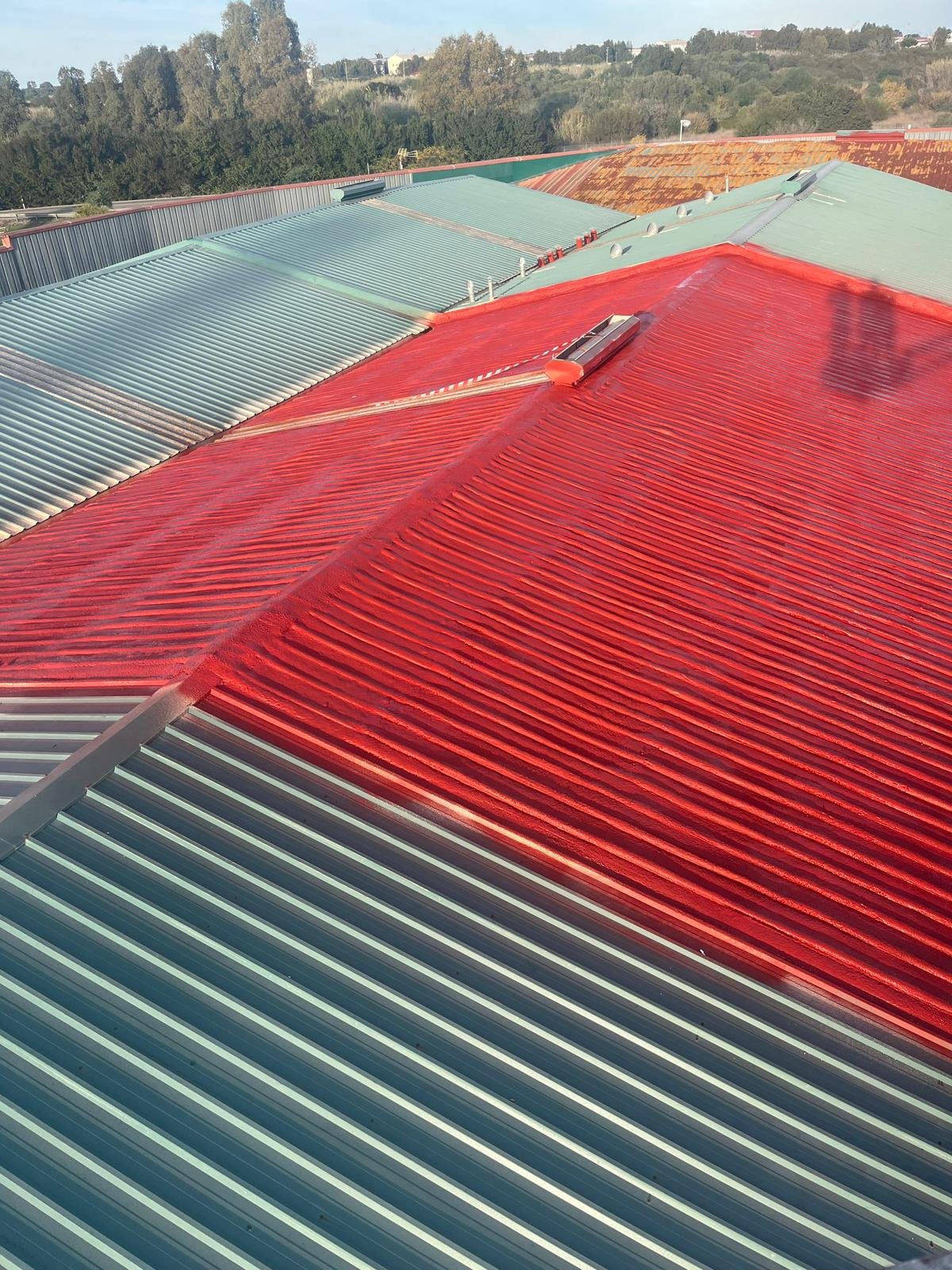
A drip can appear far from the water’s entry point. Roofs with numerous overlaps, fixings and junctions may retain untreated entry points after a local patch. A continuous membrane protects the defined area and its details, extending treatment beyond the visible stain.
On a prepared substrate, liquid polyurethane or polyurea forms a continuous waterproof layer without sheet joints across the treated field. Its elasticity can accommodate movement within system limits. Uniform coverage is essential; expansion joints, cracks and junctions need dedicated detailing.
Continuity does not replace diagnosis. Damaged elements, corrosion, adhesion, moisture, falls and drains must be addressed. A membrane does not guarantee that cracks will never develop or resolve plumbing leaks outside the treated area.
Insulation limits heat transfer through treated elements and helps improve comfort for people working in the building.
Reducing water ingress helps prevent wetting damage to goods, machinery and finishes and problems in circulation areas.
A coordinated refurbishment can reduce repeated local repairs, with suitable preparation and ongoing maintenance.
We assess access, working areas and equipment protection to limit disruption, without promising uninterrupted operation.
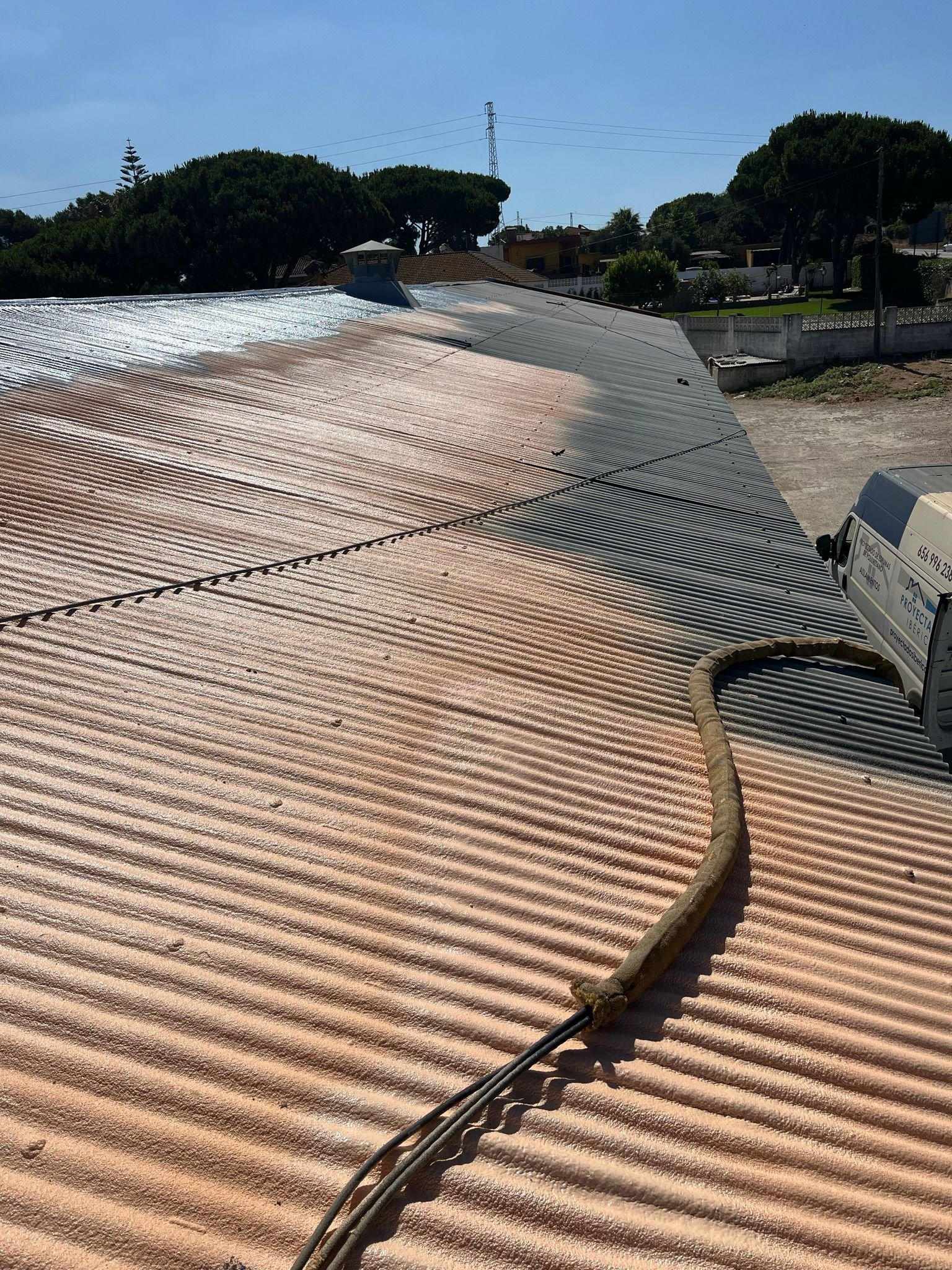
Sprayed insulation for accessible, compatible surfaces. Formulation, thickness and finish are selected for roofs and walls, including protection where exposed. Insulating foam does not replace a complete waterproofing system.
Explore foam insulation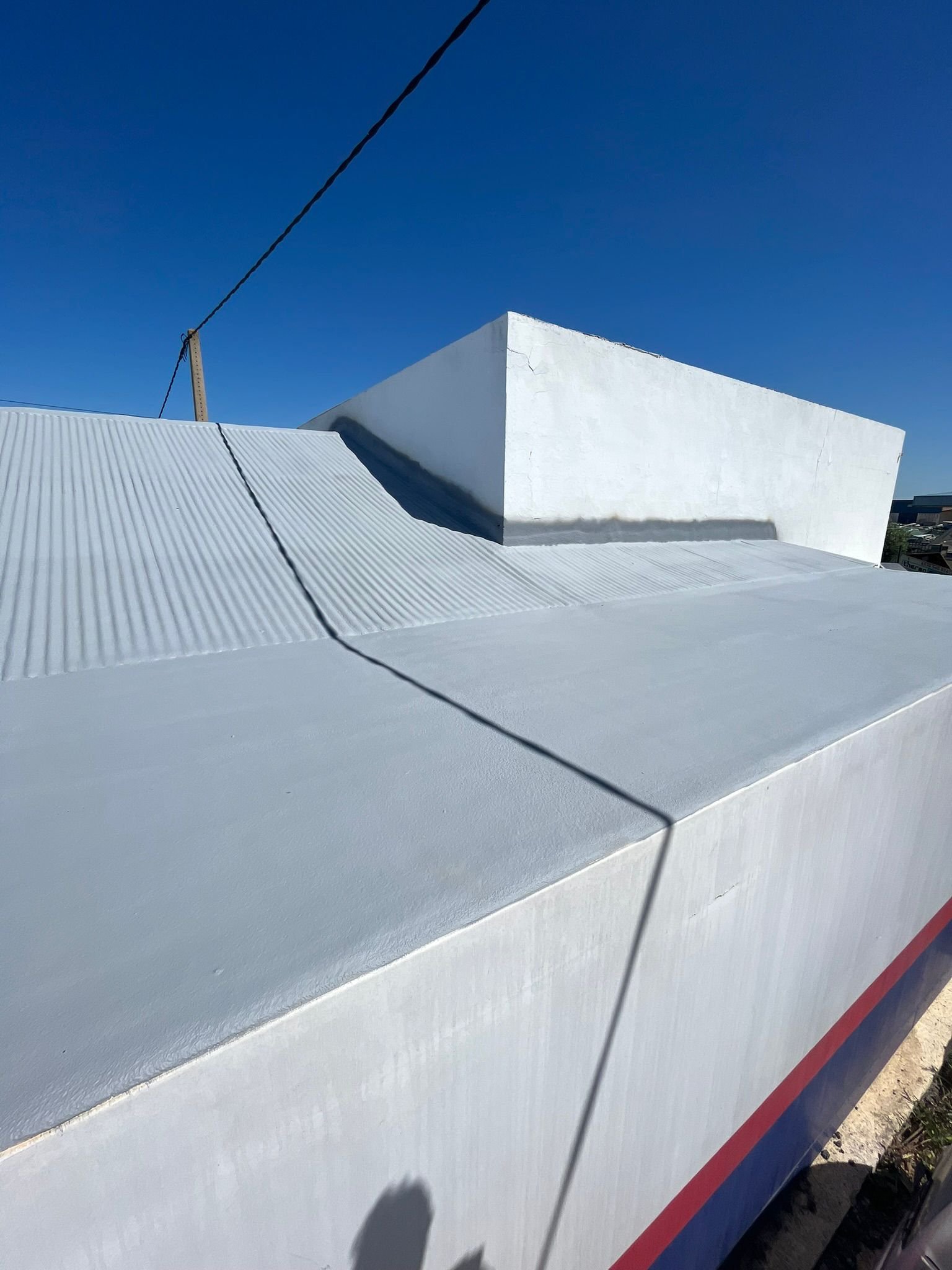
Continuous protection for compatible roofs, with primer and detailing of fixings, junctions and drainage. The system and finish account for movement, sunlight, maintenance and expected loads.
Explore waterproofing membranesTell us the location, approximate area, roof type and whether heat, cold, condensation or leaks are the main concern. We prepare proposals for work in Spain and abroad.
Request an industrial building assessment