Sprayed foam follows the shape of the boat
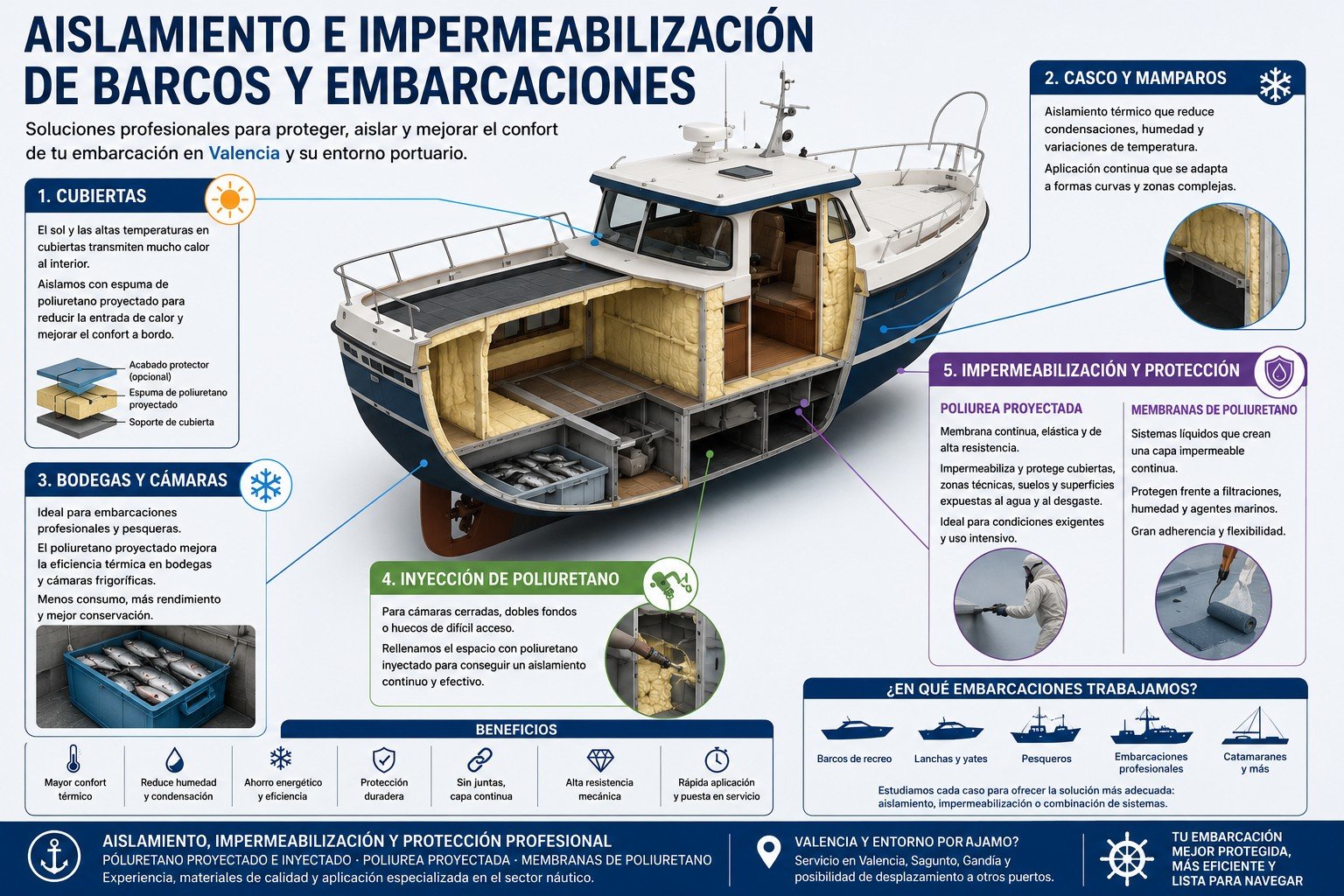
Hull curves, frames and changing sections make continuous insulation with rigid pieces challenging. Sprayed polyurethane foam follows accessible surfaces and accommodates complex junctions on compatible, prepared substrates.
Closed-cell formulations can be assessed where low water absorption is required. Product and thickness are selected for the project; general building foam is not automatically suitable for marine use.
Hull, interior and hold applications
Inside the hull
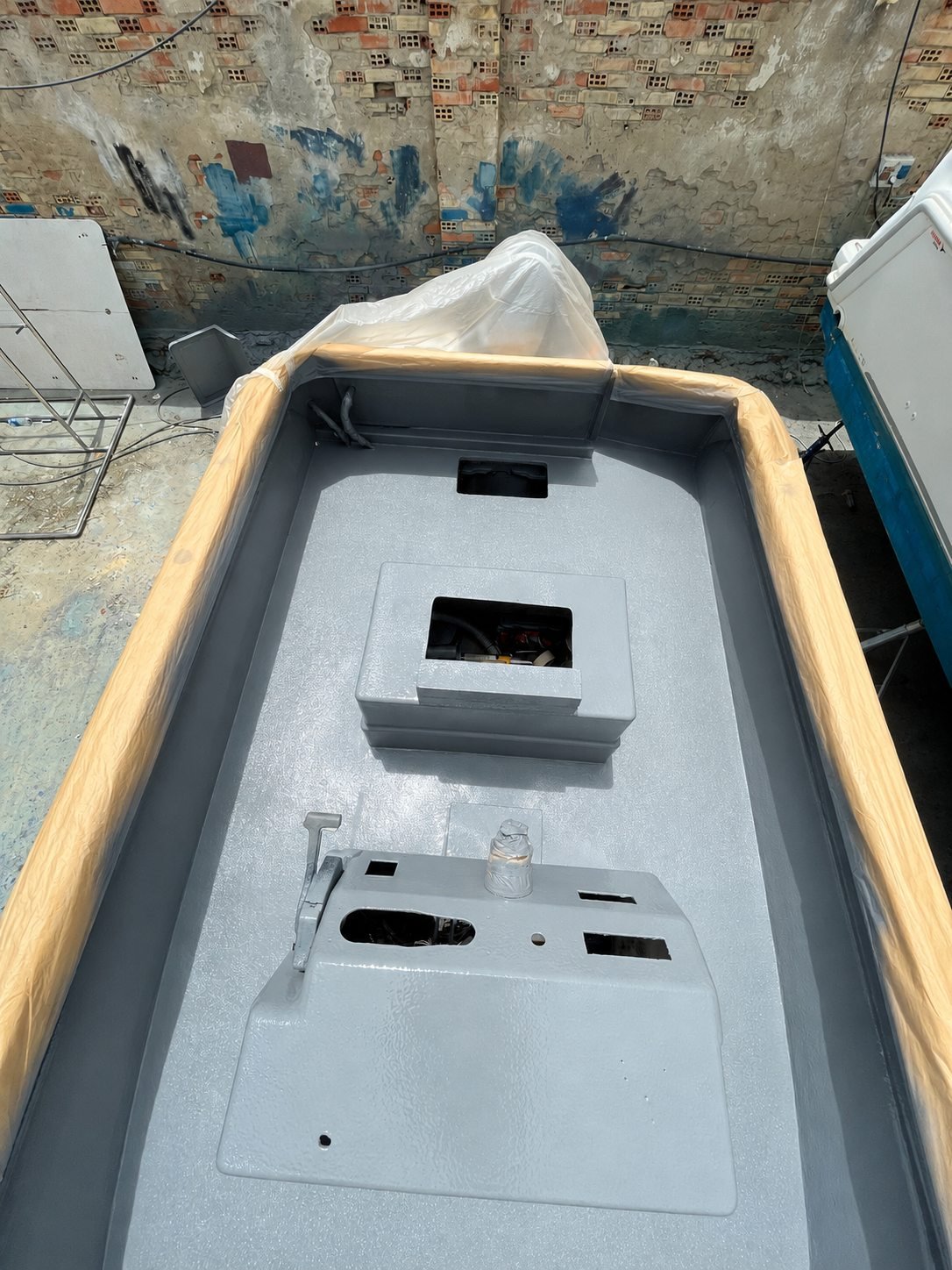
Interior hull surfaces and sides can be insulated with attention to stiffeners, joints and existing coatings. Metal substrates require checks of corrosion and protective preparation. Inspection access and designed drainage paths remain available.
Cabins and interiors
Helps limit heat transfer through walls and ceilings and stabilise indoor temperatures. Insulation is coordinated with ventilation and interior linings; it does not eliminate every source of condensation.
Fish holds and refrigerated spaces
Limits heat entering fish, ice or refrigerated cargo. Walls, ceilings, floors, hatches, nearby heat sources and the loss of usable storage volume all form part of the design.
Compartments and other cargo
Temperature, moisture, cleaning and loading impacts determine the finish. Tanks, fuel or chemical exposure and machinery spaces need specific assessment.
Benefits of insulation on board
- Reduced heat transfer from outside and warm compartments.
- Potentially lower heating or refrigeration demand and ice melt, depending on use.
- Greater comfort and support for condensation control alongside suitable ventilation.
- Adaptation to curved surfaces and improved continuity at treated junctions.
Explore polyurethane foamInsulation and protection as a complete system
Insulating foam does not repair hull leaks, replace structural watertightness or act as antifouling paint. Waterproof or protective coatings are selected separately for substrate and exposure; permanent immersion needs a specifically suitable system.
The design must address fire performance, installation compatibility and application and re-entry conditions. Insulation alone does not establish buoyancy or structural reinforcement; those uses require dedicated design.
Tell us about your vessel
Tell us the boat type, hull material, treatment area and intended use or cargo. We prepare proposals for work in Spain and abroad.
Request a boat assessment